
Take The Coltrane-7 Motivic Types
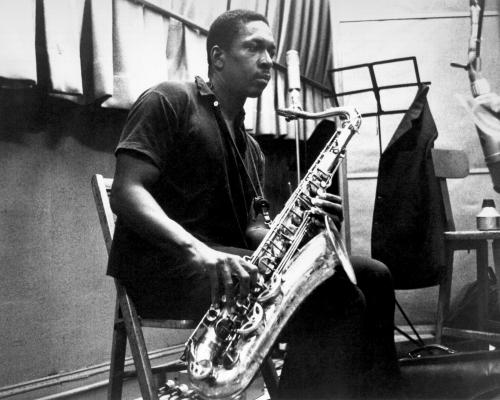 When we think of John Coltrane, we usually jump straight to the harmonic minefield of Giant Steps or the spiritual heights of A Love Supreme. But if you want to understand how he actually built his language, you have to look at John Coltrane’s blues solo work — because the 12-bar blues was his true laboratory. In this lesson, I dig into one of the most revealing solos of his Late Period — his performance on “Take the Coltrane,” recorded with Duke Ellington in 1962. Here we identify seven distinct motivic types that Coltrane used to construct a unified musical story, from the opening rhythmic cell that anchors the entire solo, to the specific five-note pattern he reserved almost exclusively for the subdominant chord.
What you will walk away with is a completely new way of hearing a John Coltrane blues solo. You will see how Trane introduced his musical characters early, developed them as the solo unfolded, and brought the main ones back together for a final chorus that lands with the satisfaction of a great novel coming full circle. Regardless of what instrument you play, I believe the motivic framework at the heart of this lesson applies to any improviser who wants to tell a real story over the changes.
PDF & AUDIO DOWNLOAD:
The “Take The Coltrane” lesson files, can be downloaded for $11.50. The download includes the following files: –PDF booklet with 5 Choruses of Coltrane’s solo in standard notation and TAB. Also included — Explanation of the 7 Motives and markings of where they appear in the notation, and —The 24 permutations of the 1-2-3-5 tetrachord. -MP3s of the included transcription played on guitar —Band in a Box files including the solo, and -MIDI files you can import directly into GuitarPro, MuseScore, or your favorite notation app.


0 Comments